For parents of children diagnosed with autism spectrum disorder (ASD), two goals often sit at the very top of their priority list: helping their child build meaningful connections with others and fostering the skills necessary for a self-sufficient life. At Valcor ABA, we recognize that social interaction and independence are not just “milestones” they are the keys to a fulfilling, empowered future.
Applied Behavior Analysis (ABA) is often associated with managing challenging behaviors, but its most profound impact often lies in its ability to break down complex social nuances and daily living tasks into teachable, achievable steps. In this post, we’ll explore how ABA therapy serves as a bridge to social success and personal autonomy.
Human beings are inherently social. From the playground to the workplace, our ability to navigate social cues, share experiences, and collaborate determines much of our quality of life. For children with ASD, these “unwritten rules” of social engagement can feel like a foreign language.
Similarly, independence, the ability to dress oneself, prepare a snack, or manage personal hygiene builds self-esteem. When a child learns they can do something for themselves, their world expands. They move from a state of total reliance on caregivers to becoming active participants in their own lives.
Social skills are more than just “being nice.” They involve a sophisticated web of behaviors, including eye contact, joint attention, empathy, and conversational turn-taking. ABA uses evidence-based strategies to make these abstract concepts concrete.
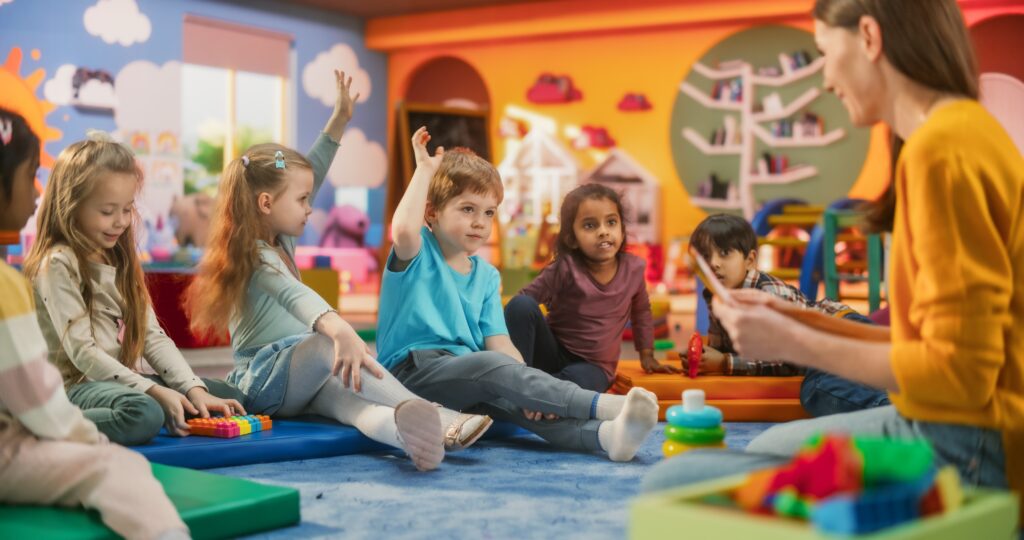
One of the most effective ways we foster connection at Valcor ABA is through structured social skills groups. Here, children interact with peers in a controlled, supportive environment.
Many children with ASD are visual learners. Video modeling involves watching a video of someone (a peer, an adult, or even themselves) performing a social task correctly such as introducing themselves or responding to a losing game.
For children who struggle to initiate conversation, we often use scripts. Initially, a child might use a written or verbal script to start an interaction (“Hi, do you want to play blocks?”). As the child becomes more comfortable, the script is “faded” out until the interaction becomes spontaneous.
Independence is the ultimate goal of any therapeutic intervention. In ABA, we focus on Functional Living Skills (FLS) the tasks required to navigate daily life with minimal assistance.
The secret to teaching independence is Task Analysis. This involves taking a complex task like washing hands and breaking it into tiny, manageable steps:
Once a task is broken down, we use “chaining” to teach it:
A skill isn’t truly mastered until it can be done anywhere. If a child can brush their teeth at the center but not at home, the skill isn’t functional yet. ABA therapists work closely with parents to ensure that the independence gained during therapy sessions “generalizes” to the home, school, and center.
In both social and independent skill-building, positive reinforcement is our most powerful tool. We don’t just want a child to perform a task; we want them to want to do it. By pairing successful social interactions or completed chores with meaningful rewards, be it verbal praise, a favorite activity, or a token we build the child’s confidence and desire to try again.
At Valcor ABA, we believe that every child has the potential to connect with others and lead a more independent life. By focusing on the individual’s strengths and using the science of behavior, we can turn “I can’t” into “I did.”
Enhancing social skills and independence isn’t just about following rules; it’s about giving your child the freedom to navigate the world with confidence. Contact us today to learn more about our services, and how to get started with in-home ABA therapy in Savannah, and throughout Chatham County, Georgia.